
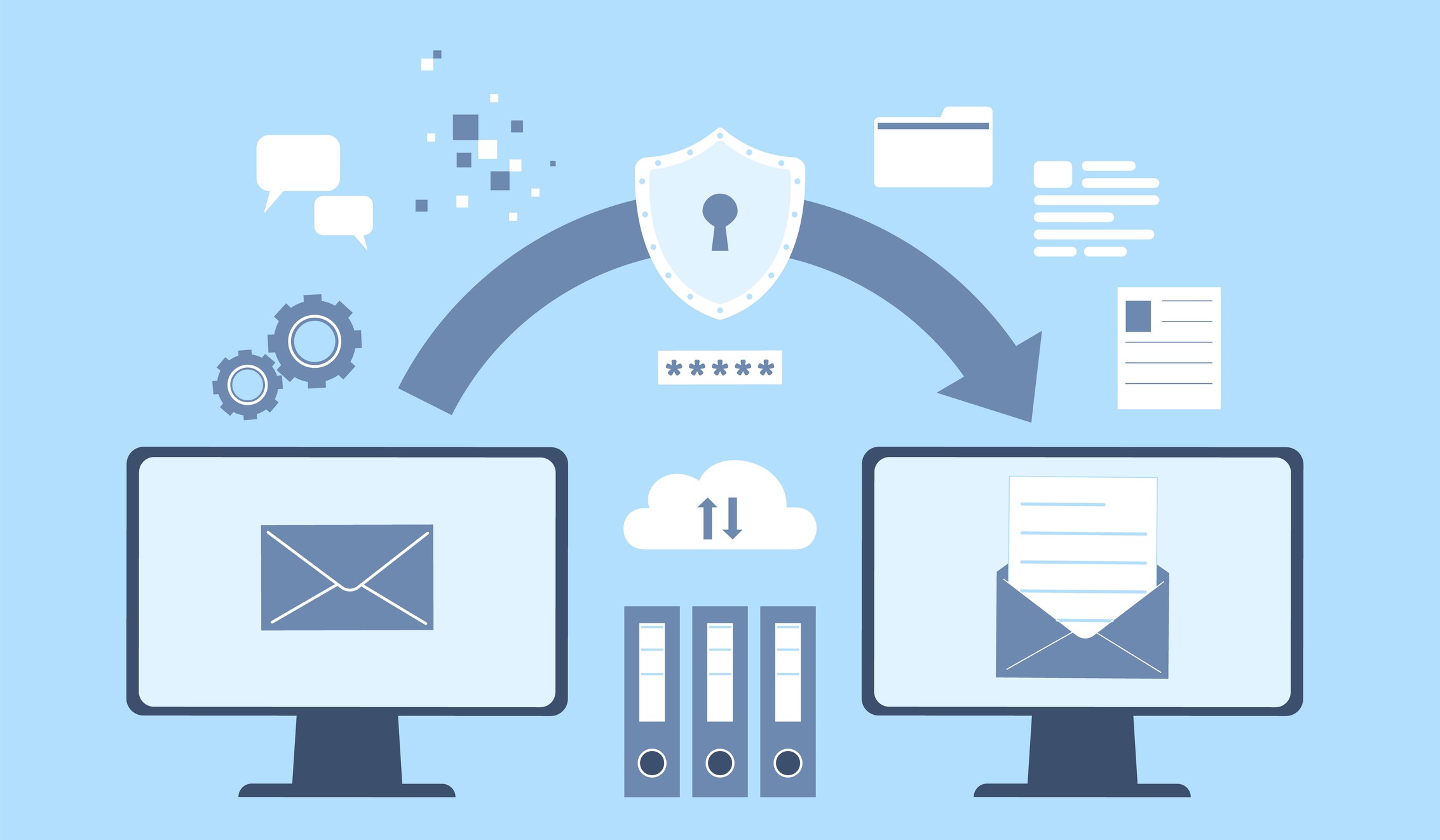
At some point, almost everyone has done it.
You're asked to upload a copy of your ID.
A completed medical form.
A tax document.
A signed contract.
You click a button, select a file, and watch the progress bar finish. The form submits, a confirmation message appears, and you move on with your day.
From the outside, it feels routine, even harmless. File uploads have become such a common part of doing business online that they rarely register as a security decision. If the website looks professional, uses HTTPS, and requires a login, most people assume the system behind it is handling things appropriately.
But once a file is uploaded, it doesn't simply disappear into "the system".
It's stored somewhere. It persists. It may be copied, backed up, or accessed later in ways the original uploader never sees and the organization may not fully account for. For many organizations, this is where the real risk begins.
Why File Uploads Rarely Raise Red Flags
On the surface, most upload workflows look well protected.
The website uses HTTPS. Users log in with a username and password. Access is limited to staff or specific roles. The platform itself may be widely used and regularly updated. From a practical standpoint, it feels reasonable to assume that anything uploaded through this system is handled securely.
For many organizations, these controls form the foundation of their security confidence. If access to the application is restricted, then access to the uploaded files must be restricted as well, or so the thinking goes.
The problem is that these safeguards are designed to protect the application, not the data.
HTTPS protects files while they are being transmitted, not how they are stored or accessed later. User permissions control what someone can do inside the interface, not who can ultimately reach the underlying files. Even strong passwords and multi-factor authentication only govern entry points, not what happens behind the scenes once a file exists on the system.
Many of the controls organizations rely on are focused on who can log in, not who can see, copy, or access uploaded documents.
This is why file uploads are so often overlooked as a risk. They appear to be covered by familiar security measures, even though those measures were never designed to manage sensitive documents throughout their entire lifecycle.
And that gap, between how secure uploads feel and how they actually behave, is where problems tend to surface.
What Happens After a File Is Uploaded
Once a file is uploaded, it becomes part of the system in ways that aren't always obvious from the user interface.
In many setups, uploaded documents are stored directly on the same server as the application itself. They live alongside website files, databases, and logs. From there, they're often included in routine backups, copied to staging or development environments, or replicated as part of normal infrastructure operations.
Over time, access to those files can expand quietly.
System administrators may have visibility into them. Developers troubleshooting unrelated issues may encounter them. Hosting providers or managed services may be able to access them as part of maintenance or recovery processes. None of this requires malicious intent, it's simply how most application environments are structured.
What started as a single, intentional upload becomes a persistent asset that exists well beyond its original purpose.
Retention is another common blind spot. Files are rarely removed automatically. They remain stored long after a transaction is completed, a case is closed, or a relationship ends. In many organizations, there is no clear record of who accessed a document, when it was accessed, or whether it should still exist at all.
From the outside, everything still appears secure. The form works. The website behaves normally. No alerts are triggered.
But behind the scenes, sensitive documents may now be scattered across systems that were never designed to enforce strict access control, auditing, or regulatory boundaries.
This is how routine uploads quietly turn into long-term risk, not because someone made a mistake, but because the system was never designed to handle sensitive files differently from any other piece of content.
When File Uploads Become a Liability
The risk with file uploads isn't limited to external attacks or high-profile breaches. More often, it comes from exposure that happens quietly, over time, within systems that were assumed to be safe.
When sensitive documents are stored alongside application files, access tends to be broader than intended. Administrative roles may allow visibility well beyond what policy permits. Backup systems may contain copies of files that are difficult to track or remove. Temporary access granted for maintenance or troubleshooting can unintentionally expand who is able to see regulated information.
In these situations, the challenge isn't just preventing unauthorized access, it's proving that access was appropriate in the first place.
Many organizations cannot reliably answer basic questions about uploaded documents:
- Who accessed this file?
- When was it accessed?
- Was that access authorized?
- Does the file still need to exist?
Without clear, tamper-resistant records, these questions are difficult or impossible to answer after the fact. This creates significant exposure under modern privacy and data protection regulations, which increasingly require organizations to demonstrate accountability, not just intent.
The result is a mismatch between expectation and reality. Policies may state that only certain roles are permitted to view sensitive data, while the underlying system allows far broader access. Compliance obligations may assume strict controls and auditability, even though the technical architecture does not support them.
This is why so many incidents are described as "no evidence of misuse" while still triggering regulatory scrutiny, breach notifications, or loss of trust. The absence of clear proof is itself a problem.
Why Accountability Requires More Than Rules
When organizations begin to recognize the risks around file uploads, the first response is often procedural. New policies are written. Access rules are clarified. Staff are reminded to handle sensitive documents carefully. In some cases, additional training or internal audits are introduced.
These steps are important, but they can only go so far.
Policies assume that the underlying system is capable of enforcing them. Training assumes that people have meaningful control over how data is stored, accessed, and retained. In reality, most upload workflows offer neither. Once a file is in the system, its visibility, duplication, and lifespan are determined by technical design choices that individual users and administrators cannot easily override.
This creates an uncomfortable gap between responsibility and control.
Employees may be expected to follow strict data handling rules, even though the systems they rely on quietly grant broad access behind the scenes. Compliance teams may be tasked with demonstrating accountability, while lacking the technical mechanisms needed to verify or restrict access in practice.
No amount of awareness training can prevent a file from being copied into a backup. No policy can retroactively add auditability to a system that was never designed to record access in a reliable way.
This is why organizations that take data protection seriously eventually reach the same conclusion: if the system itself does not enforce appropriate boundaries, operational discipline alone will never be sufficient.
A Better Model for Handling Sensitive Files
Once it becomes clear that file uploads create long-term risk, the question isn't how to tighten existing workflows, but whether those workflows are appropriate at all.
Many modern applications treat uploaded files the same way they treat images, PDFs, or other static assets. They're stored alongside the application, governed by the same permissions, and protected by the same infrastructure. That approach works for general content, but it breaks down when documents contain personal, financial, or regulated information.
Handling sensitive uploads safely requires a different model.
Instead of assuming the application can be trusted with the data, a safer approach assumes the opposite (Zero Trust Security Model). The application becomes a conduit, a way for users to submit and retrieve documents, but not the place where sensitive files are stored, governed, or audited. Protection shifts away from the interface and toward a controlled environment designed specifically for managing access, accountability, and retention.
In this model, access to uploaded files is enforced independently of the website or application that collected them. Permissions are intentional and narrowly scoped. Every access can be attributed and reviewed. Data residency and retention are explicit rather than incidental.
Most importantly, a compromise of the application itself does not automatically result in exposure of the underlying documents.
This architectural separation changes the risk profile entirely. Sensitive files are no longer just "uploads" sitting inside a web platform; they become protected records with defined rules around who can access them, for what purpose, and under what conditions.
Why Users Shouldn’t Carry the Risk
For most people, uploading sensitive documents isn't a choice, it's a requirement. Accessing healthcare, applying for services, completing financial transactions, or signing contracts increasingly depends on submitting personal information online.
In these situations, individuals are often asked to trust that their documents will be handled responsibly, without being given much insight into how that happens. They can't see where files are stored, who can access them, or how long they'll be retained. Nor should they be expected to evaluate technical safeguards or security architecture on their own.
That responsibility belongs to the organization requesting the information.
At a minimum, individuals should be able to expect transparency and intent. Clear communication about why documents are required, how they will be used, and how access is controlled should be standard. Upload mechanisms for sensitive data should feel purpose-built, not like a generic form field reused for convenience.
When sensitive documents are handled properly, the system itself limits unnecessary exposure. Access is deliberate rather than broad. Retention aligns with purpose rather than habit. Accountability exists even if the user never sees it.
When these safeguards are missing, the burden quietly shifts onto the individual, who has no practical way to protect their data once it has been uploaded.
The goal of better system design isn't to ask users to trust less, but to ensure that trust is justified. When organizations take responsibility for how uploads are handled behind the scenes, individuals no longer need to wonder what happens to their data after they click "Submit".
Good Outcomes Start With the Right Structure
File uploads aren't inherently dangerous. What creates risk is the assumption that systems built for convenience, content, or general application logic are also suitable for handling sensitive documents.
As long as uploads are treated as just another feature inside a web platform, organizations will continue to rely on controls that were never designed to manage long-term access, accountability, or regulatory exposure. When something goes wrong, the response often focuses on process and policy, even though the root cause is structural.
The organizations that avoid these problems take a different approach. They separate the user-facing application from the systems responsible for protecting sensitive data. They design access controls, auditing, and retention into the architecture itself, rather than layering them on afterward. And they assume that applications may change, be misconfigured, or even be compromised, without allowing those events to expose regulated information.
This is the design philosophy behind systems like LockerRX. Instead of storing sensitive files inside websites or CMS platforms, LockerRX enforces protection, access control, and auditability outside the application layer, where those safeguards can't be weakened by interface-level decisions or operational drift.
Not every organization needs the same implementation. But every organization that accepts sensitive uploads faces the same question: Is your system designed to protect data over time, or just to collect it?
For many, recognizing that distinction is the first step toward reducing risk that policies alone can't address.